
A Deep Dive into benefits of Ragi Mudda
Ragi Mudda, also known as Ragi Sangati or Ragi Kali, is a traditional South Indian dish made from finger millet (ragi) flour and water. It is a gluten-free, nutrient-dense food with deep cultural roots and significant health benefits.
This comprehensive guide explores its history, cultural significance, modern considerations, and why this ancient grain is gaining global recognition as a superfood.
History and Cultural Roots
🌿
Origin of Finger Millet:
Finger millet originated in Africa and has been cultivated in India for approximately 4000 years.
🌍
Regional Significance:
Ragi Mudda is a cultural cornerstone in the southern Indian states of Karnataka, Andhra Pradesh, and Tamil Nadu.
🥣
Preparation:
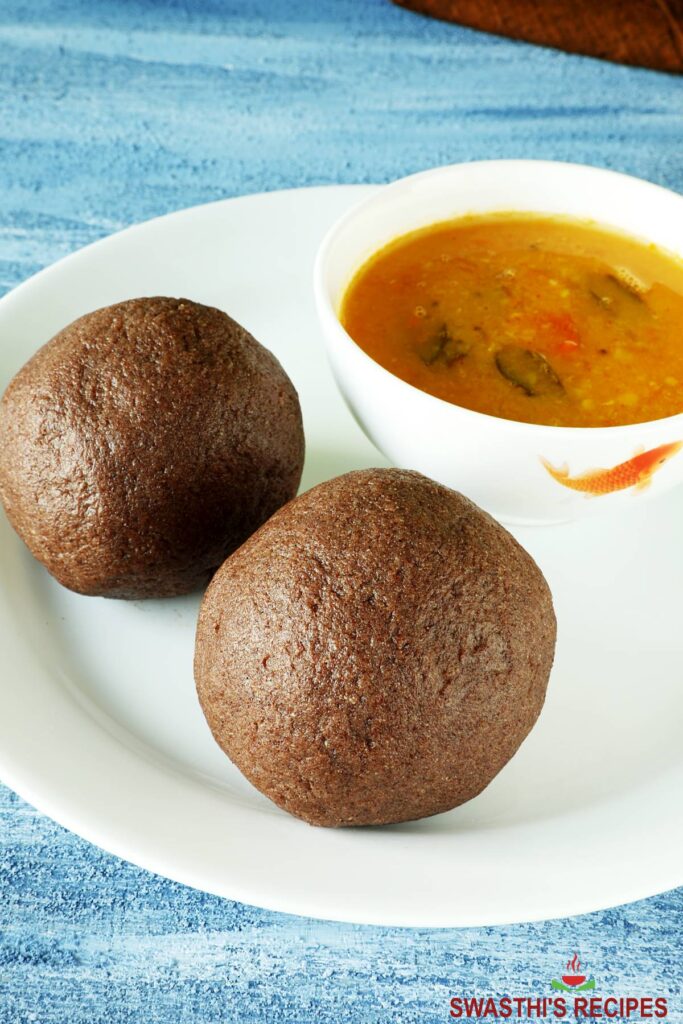
Traditionally, ragi flour is mixed with boiling water to form a thick paste, which is then vigorously mixed into a dense, dough-like mass and shaped into firm, rounded balls.
🍽️
Consumption:
The traditional method involves swallowing the ragi balls, not chewing, often accompanied by saaru (broth), curries, or yogurt. This method is believed to support slower digestion, aligning with Ayurvedic principles.
📜
Historical Context:
Historically considered the “poor man’s grain,” Ragi Mudda provided sustained energy for farming communities and laborers and has now been recognized as a “superfood.”
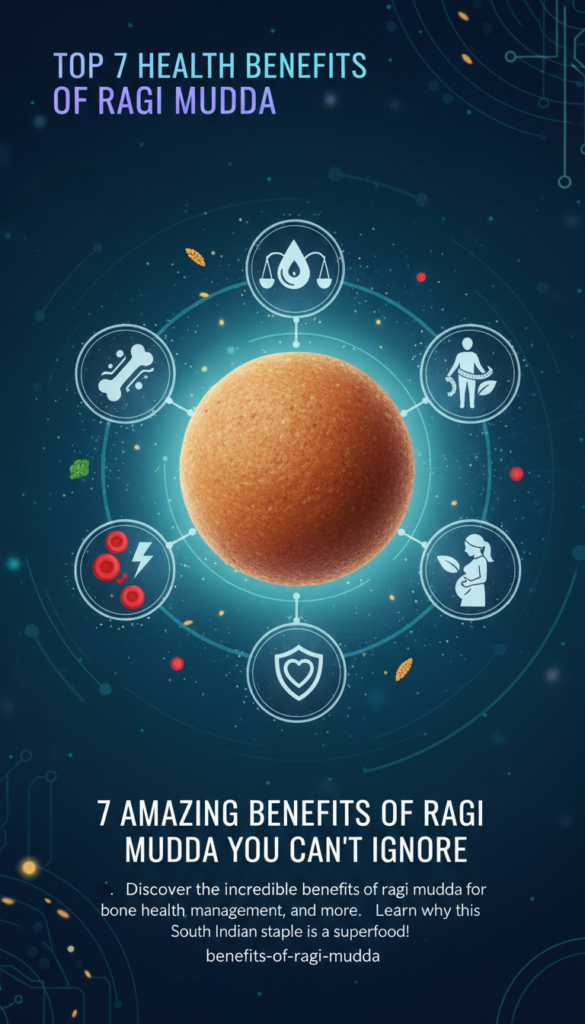
Top 7 Health Benefits of Ragi Mudda
Bone Health Champion (Calcium King)
- Ragi Mudda contains up to ten times more calcium than rice or wheat, providing approximately 310-345mg of calcium per 100g serving.
- This high calcium content strengthens bones and teeth, helping to prevent osteoporosis.
- It is particularly important for women during pregnancy and lactation, and for developing children’s bones.
Smart Blood Sugar Management (Diabetes Ally)
- In its traditional form, Ragi Mudda has a low Glycemic Index (GI) of approximately 48.
- This leads to minimal blood sugar spikes and a steady release of energy, beneficial for managing diabetes and improving insulin sensitivity.
- *Note: Finely ground ragi flour can have a higher GI; consuming the whole, unadulterated form is recommended for blood sugar benefits.
Weight Loss Sidekick (Fiber-Rich & Satisfying)
- Each ball of Ragi Mudda contains about 3.2 grams of dietary fiber.
- High fiber content promotes satiety, reduces cravings, and aids in appetite control.
- It also contains the amino acid tryptophan, which contributes to appetite regulation.
Digestive Health Hero (Happy Gut)
- The high insoluble dietary fiber content promotes regular bowel movements and helps prevent constipation.
- It is naturally gluten-free, making it suitable for individuals with gluten sensitivities or intolerances.
- It supports a healthy gut microbiome.
Boost Energy & Beat Anemia (Iron Powerhouse)
- Ragi Mudda is a good source of iron, providing roughly 3.5-3.9 mg per 100g serving.
- Iron is crucial for red blood cell production, combating anemia and fatigue.
- It improves oxygen transport throughout the body, leading to increased energy levels.
- *Note: Phytates in ragi can inhibit iron absorption, but practices like soaking or sprouting the grains can enhance bioavailability.
Guardian of Your Heart (Cholesterol-Friendly)
- Ragi Mudda is rich in magnesium (approximately 123mg per ball) and antioxidants like polyphenols and flavonoids.
- It has minimal cholesterol and sodium, supporting cardiovascular function.
- It aids in reducing cholesterol levels and possesses anti-inflammatory properties.
Superfood for Expecting & New Moms (Pregnancy & Lactation Support)
- Rich in calcium, iron, fiber, and folate.
- Provides essential nutrients for fetal development.
- Helps prevent maternal anemia and constipation.
- May reduce the risk of gestational diabetes.
Modern Considerations and Smart Choices
Chew vs. Swallow Debate:
While traditional swallowing promotes slow digestion, modern perspectives suggest chewing aids in food breakdown and nutrient absorption. Personal preference dictates the method.
Accompaniments:
Ragi Mudda is best enjoyed with flavorful curries, sambar, dal, or yogurt, often enhanced with ghee.
Controversies and Misconceptions:
- Hygiene: A viral video sparked debate regarding traditional food preparation (serving with bare hands).
- Glycemic Index: Misconceptions exist regarding the GI of ragi, particularly the difference between finely ground flour and the whole mudda.
- Social Status: The historical association of ragi with “lower social status” has been replaced by its recognition as a prized “superfood.”
Potential Side Effects and Considerations:
- Digestive Discomfort: Excessive consumption without adequate water may cause bloating, gas, or constipation due to high fiber.
- Kidney Stones: Individuals prone to kidney stones should exercise caution due to oxalates.
- Mineral Absorption: Phytic acid can interfere with mineral absorption; soaking, sprouting, or fermenting mitigates this.
- Thyroid Function: Individuals with low thyroid function should be aware of goitrogens.
- Kidney Problems: Be mindful of protein content for those with kidney issues.
Recommended Consumption:
- Moderation: Recommended portion size is ½ to 1 ball per meal, especially for those managing diabetes or weight.
- Timing: Best enjoyed for breakfast or lunch; avoiding late-night consumption may be beneficial.
Future Trends and Innovations
Global Superfood Status:
Ragi’s popularity as a global superfood is growing, supported by government initiatives like nutrition programs and midday meals.
Climate Resilience:
As a drought-resistant crop requiring minimal water and pesticides, ragi is crucial for food security in a changing climate.
Convenience and Creativity:
- Instant Mixes: Development of instant ragi mudda mixes reduces preparation time from 30-50 minutes to 6-8 minutes.
- Mechanization: Automated machines (e.g., by CFTRI) facilitate large-scale production.
- Product Innovation: Expansion into ragi-based baked goods, snacks, beverages, and breakfast foods.
- Market Demand: Growing demand in urban and global markets increases accessibility.
Conclusion
Ragi Mudda is a traditional dish offering exceptional nutritional value and diverse health benefits, aligning with modern health goals. Incorporating it into the diet is recommended for its advantages, with personalized dietary advice available from healthcare or nutrition professionals. Visit us